The next stop on our trip through China was Shanghai. Shanghai is China's biggest city, home to about 20 million people (there are about 14 million in Beijing). As impressive as those numbers might be, keep in mind there are over 25 cities in China with more than a million residents. Shanghai is also the most cosmopolitan city in China, and aside from Hong Kong, likely has the most international flair. While Beijing is still the capital for government, the military and the Communist Party, Shanghai wears the progressive face for China.
The Chinese government is determined to make Shanghai a global capitol, investing billions in infrastructure and development. Hong Kong may be China's neglected British stepchild, but Shanghai is now the clear favorite.
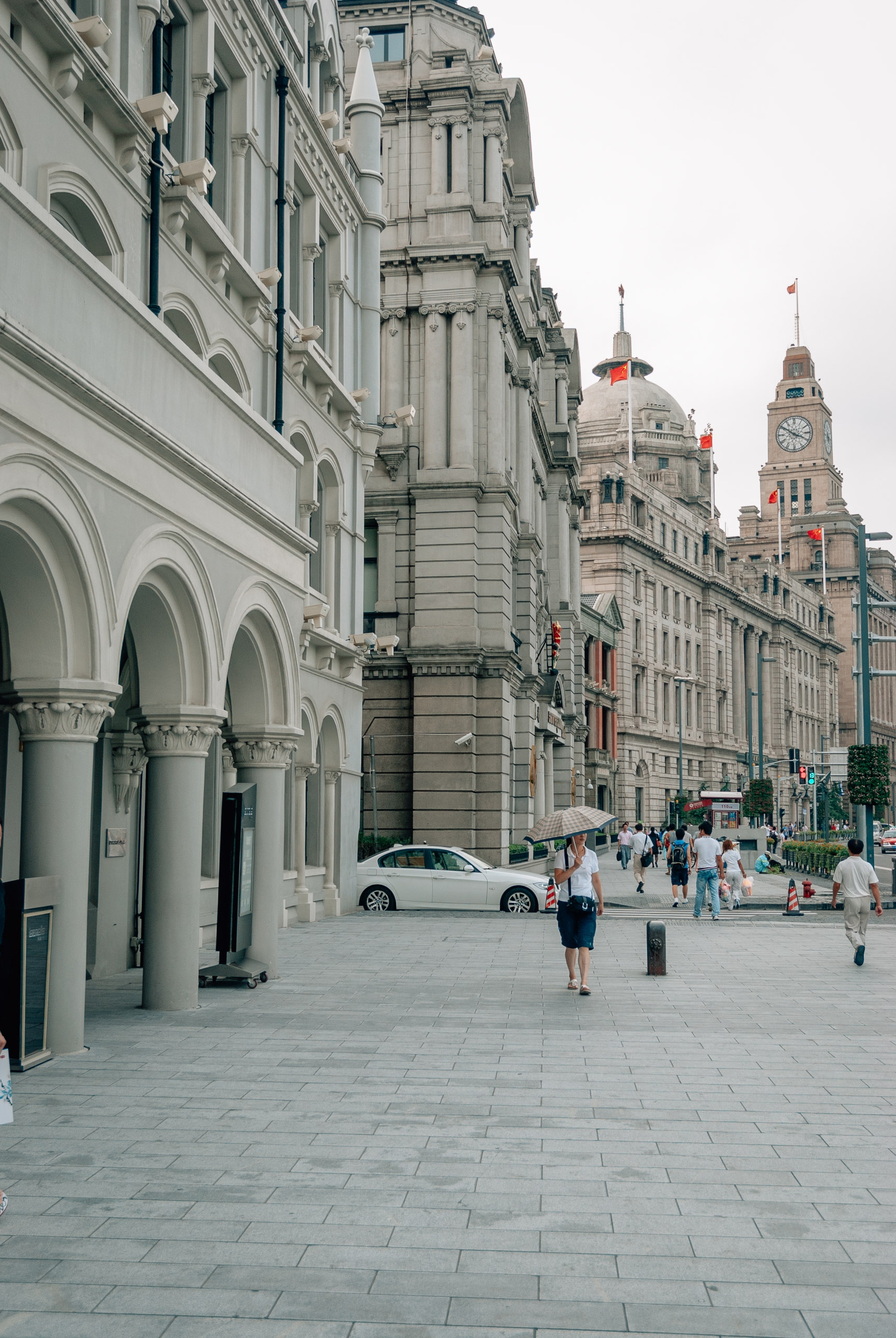
Shanghai has always played an important role in China's history, as a port of global trade with other nations in Asia and the West. Shanghai has been occupied by nearly every great colonial power, and most recently by the Japanese during World War II. Not until the establishment of the Republic and the victory of the Communist Party in 1948 were the last foreign concessions eliminated. Foreign influences remain, however, most visibly in architecture but also in urban planning, cuisine and the arts.
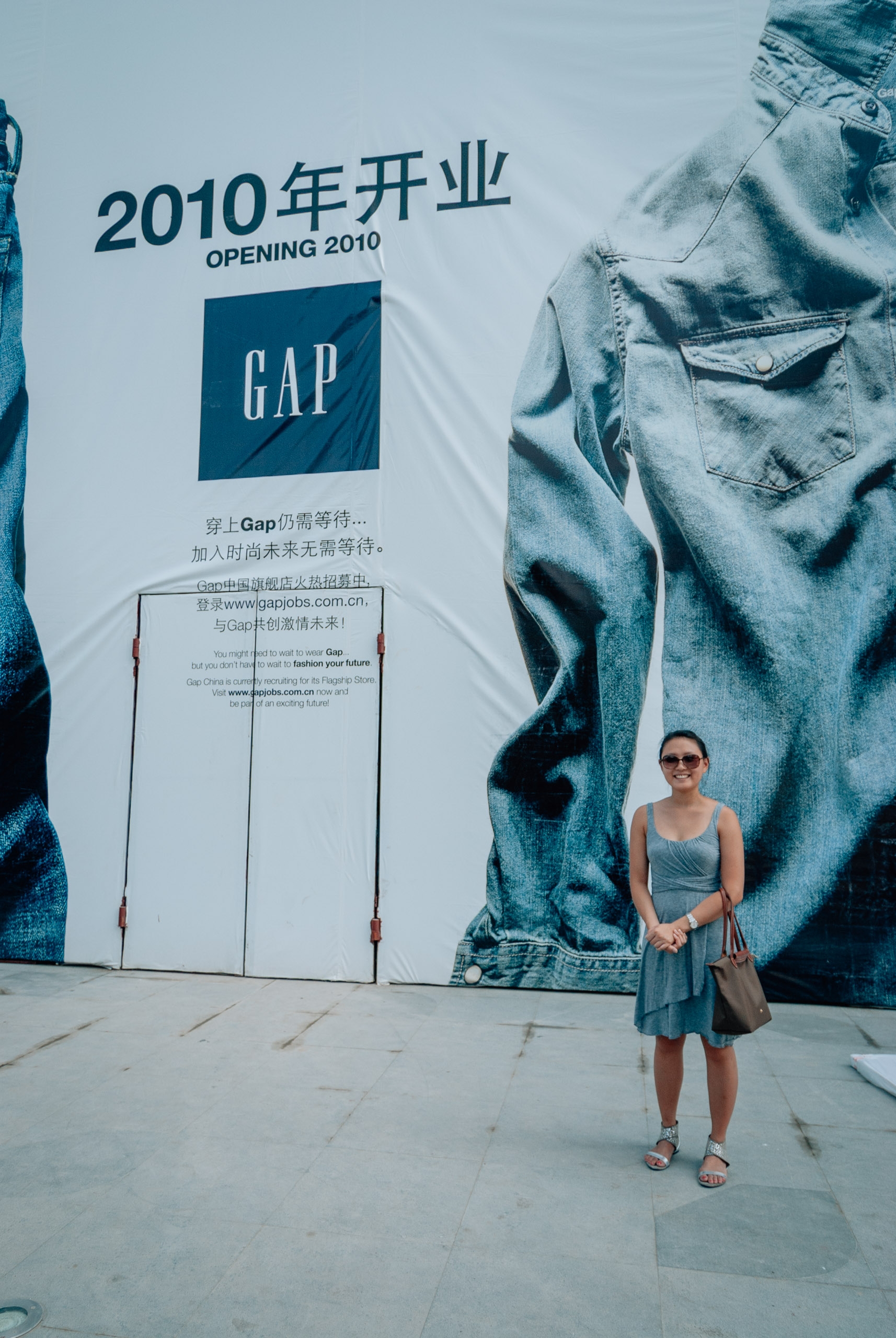
I neglected to mention in my earlier post about Beijing the reason for this trip. Gap's first stores in China open in the coming months and Jessica and her team were on site to get ready for the big store opening. In this photo Jessica poses in front of one of the many stores still under construction. Stay tuned for more details on Gap's big push into China.
We were met at the airport by a driver from our hotel and the ride into town was about 45 minutes. Shanghai boasts the world's fastest public transportation, a MagLev train that runs from Pudong National Airport into the City at speeds topping out around 270 miles per hour. The trip takes 8 minutes. Curiously, though, the train's terminus is in a very remote and inaccessible part of town, far away from the Pudong waterfront or the main corridor of Nanjing Road. The train's location and high ticket price (especially when coupled with the additional 25 minute cab ride) make for nearly empty trains. I was interested in riding the train out of town, but by the time you link your cab, the train and the airport times, it was much easier to just hop in a taxi. Maybe next time. Interesting to note that Arnold Schwarzenegger arrived the day after us on a trade mission from California, and he rode the train. Ostensibly he was looking at bullet train options for the high-speed line that will eventually link LA and San Francisco, a project about as well conceived as the Pudong MagLev terminus.
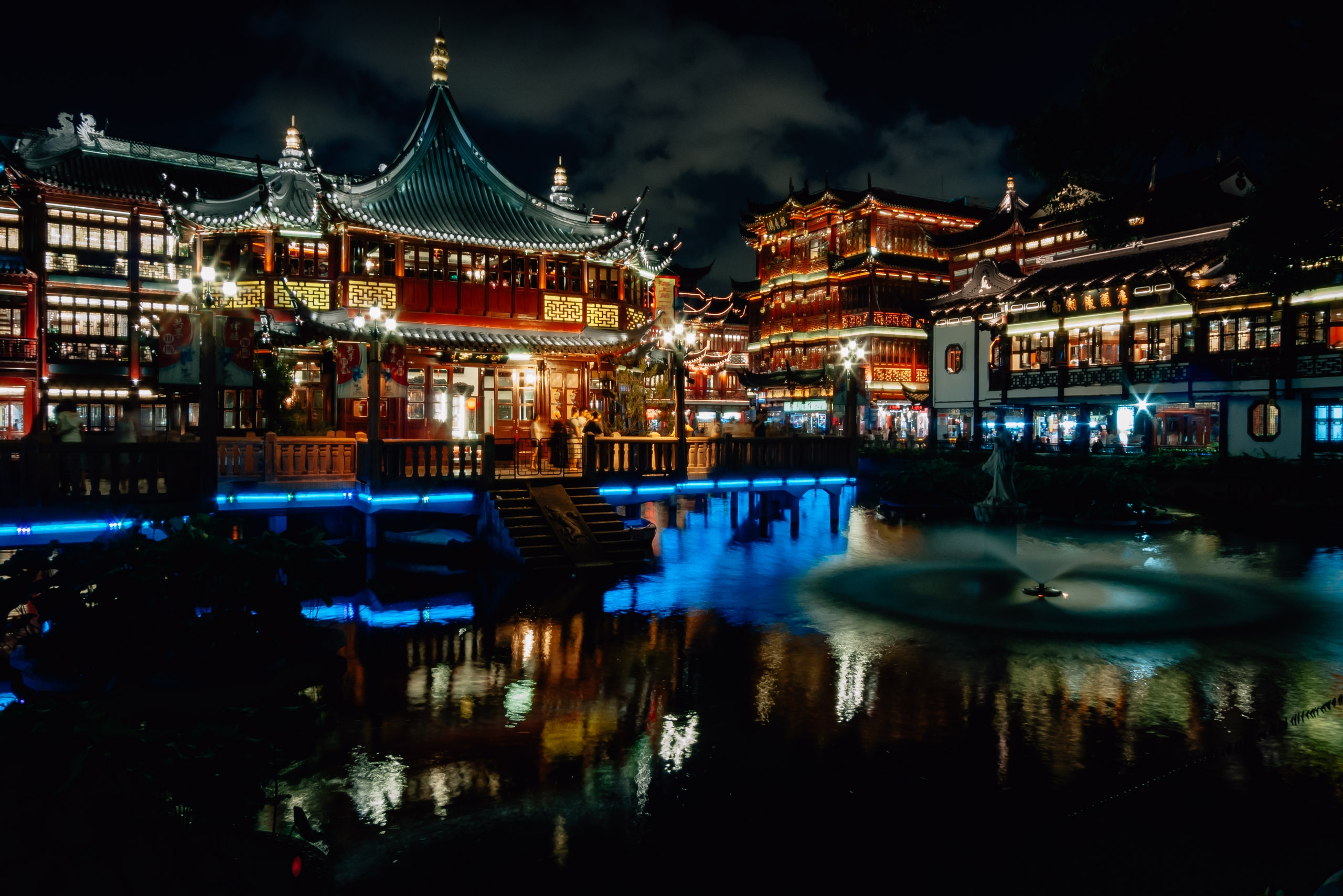
After we unpacked at the hotel, we headed out that afternoon for a little light sightseeing. We had about three days on our own before Jessica's work schedule kicked into overdrive, so that day we decided to do one of the Frommer's walking tours through the old part of town and the Yu Gardens.
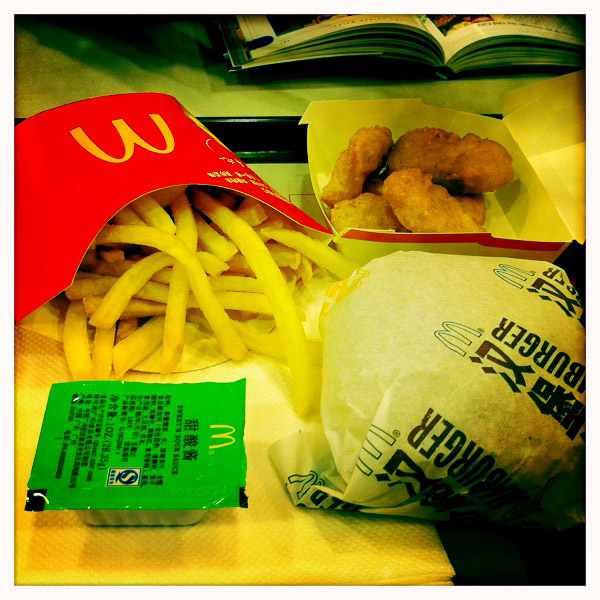
Our first stop was a traditional snack at McDonald's. We don't eat McDonald's (much) at home, but always at least once while abroad, and always the same thing - a Big Mac, fries, Coke and an order of Chicken McNuggets. These compared favorably to their worldwide counterparts save for the fries, which were sad and stale. If the fries at McDonald's are no good, then why bother?
It might be tempting to think that traveling in China would equate to dirt-cheap luxury, and while much of the country is in fact quite inexpensive (and far from luxurious), definitely not so in Shanghai. We found the bars, restaurants, hotels and better shopping areas to be pretty expensive by any comparison. One need only look around at the growth of the luxury sector in Shanghai to see the enormous opportunities abounding. The reality is no one really knows where China is headed, but the potential is so enormous that companies from around the world are planting themselves firmly, and visibly, in Shanghai to hedge against missing the boat. The fact that Gap, until recently the world's largest speciality retailer (all hail Inditex), is nearly unknown to the Chinese consumer means there exists a huge and opportunistically level playing field. You might think you can't afford to open a boutique in one of Shanghai's many high-priced luxury malls, but you most certainly cannot afford not to.
After getting up early to catch our flight and walking in the suffocating heat and humidity, it was not a late night. Tuesday we had a big day planned.
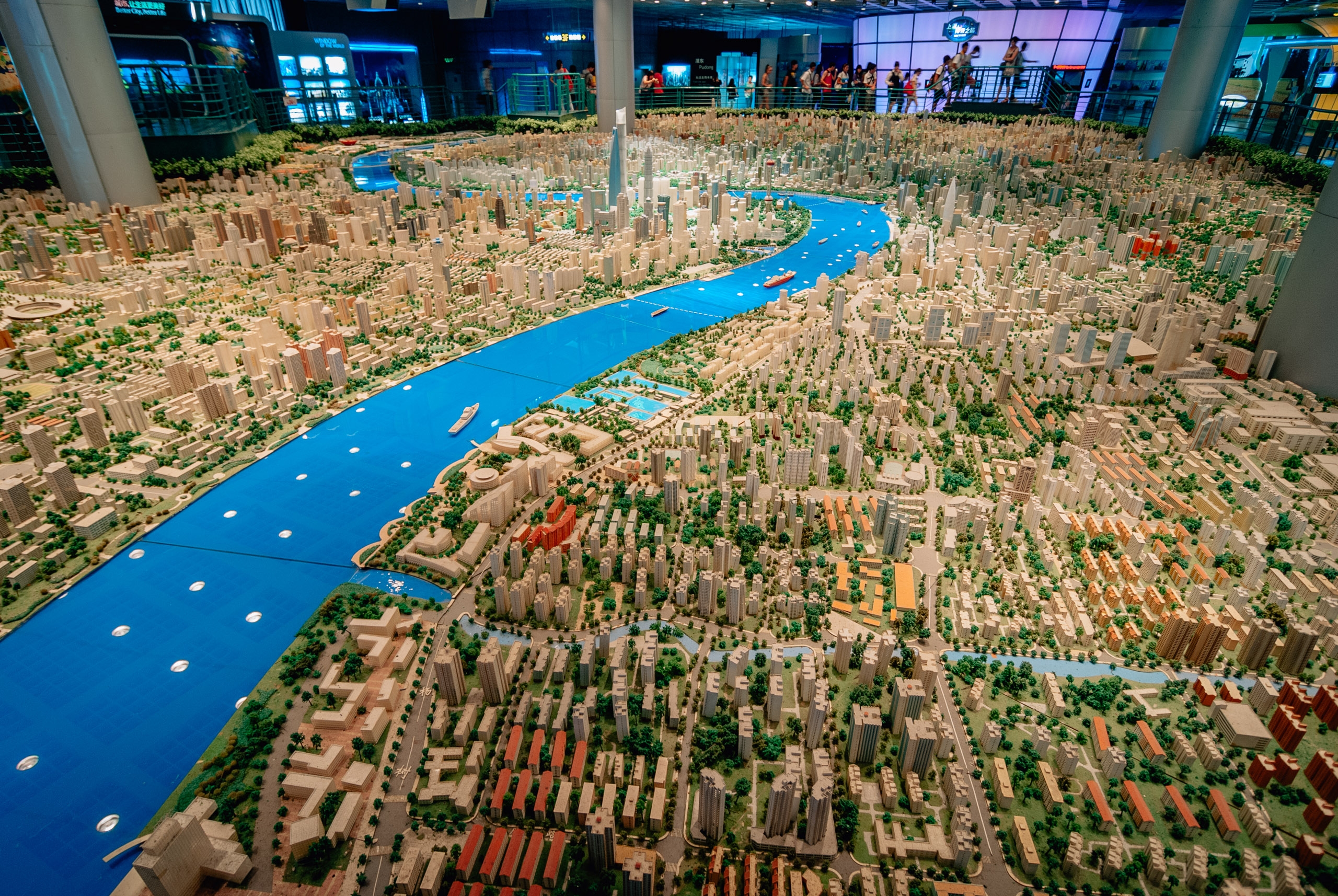
Tuesday we planned on walking the expanse of the city. We started toward People's Square in the middle of town toward our first stop, the Shanghai Urban Planning Museum. Museums tend to talk about the past, but this place is all about the future. Within these walls lie the master plans for Shanghai by 2020, and by all accounts they appear to be exactly on schedule. By 2020, Shanghai expects to grow its population by another 5 million people, and will invest in the transit and housing initiatives to get ahead of the planned growth. A 1:500 scale model on the 5th floor meticulously shows every existing and planned building that will be in place in 2020. The model itself is pretty impressive. There are a number of other exhibits that talk about advances in transit, housing, green building and waste removal. A 3D digital movie flies visitors over virtual Shanghai 2020.
The cost of this development is hard to see as a visitor. To me, Shanghai was clean, shiny, orderly and well positioned for the future. Much of this I suspect was due to the Expo, as people I know and trust visited here recently and found it to be rather dirty. In its haste to put on a friendly face for visitors, much of Shanghai's old world charm is at risk.
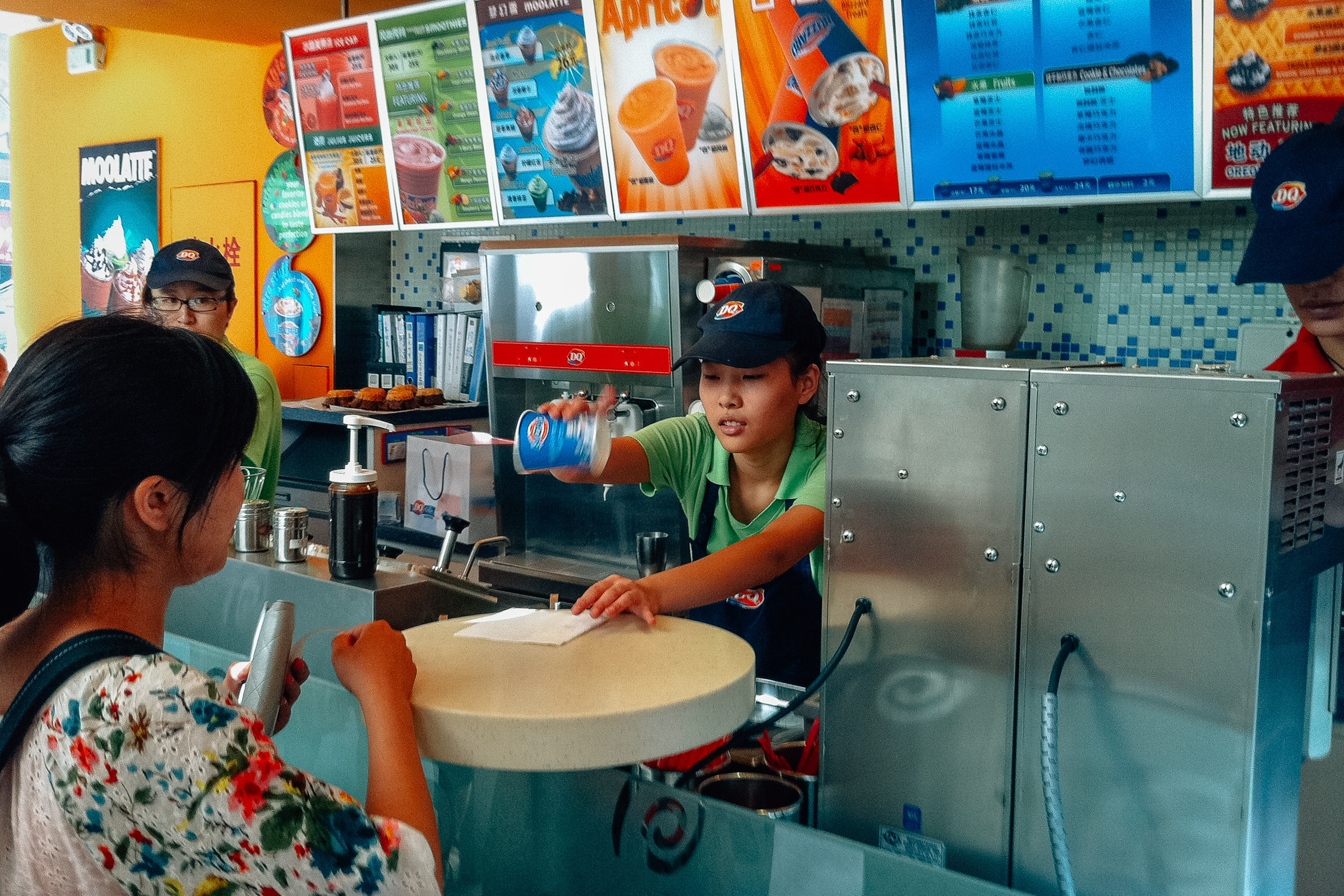
A great example is Wujiang Road. Once a dingy tin-pan alley of street food, pubs and family restaurants, it was deemed "too old" and "too unsavory" for such a prestigious location off Nanjing Road. The road's buildings were torn down and replaced by Wujiang Entertainment Street, a nice-looking but boring outdoor mall consisting of Starbucks, Dairy Queen, Watson's (an Asian Walgreen's) and, soon, a Carl's Junior. Unable to rise above the gentrification, I went to the Dairy Queen and got an Oreo Blizzard. It was awesome, and they even served it upside down.
Development sometimes comes at the expense of owners, with property being seized by corrupt city officials who in turn sell to developers for a handsome profit. This may sound outrageous, and it is, but in a country without an objective and transparent legal system or scrutinous press, it's an unfortunately one-sided transaction. Of course, in a Communist system, nobody really owns property. Just because you or your family have lived there for generations doesn't mean that house is yours. Desperate and out of options, some displaced residents protested the only way they could: by setting themselves on fire. In China's race toward the future, they don't appear to be too weighed down by who might get left behind.
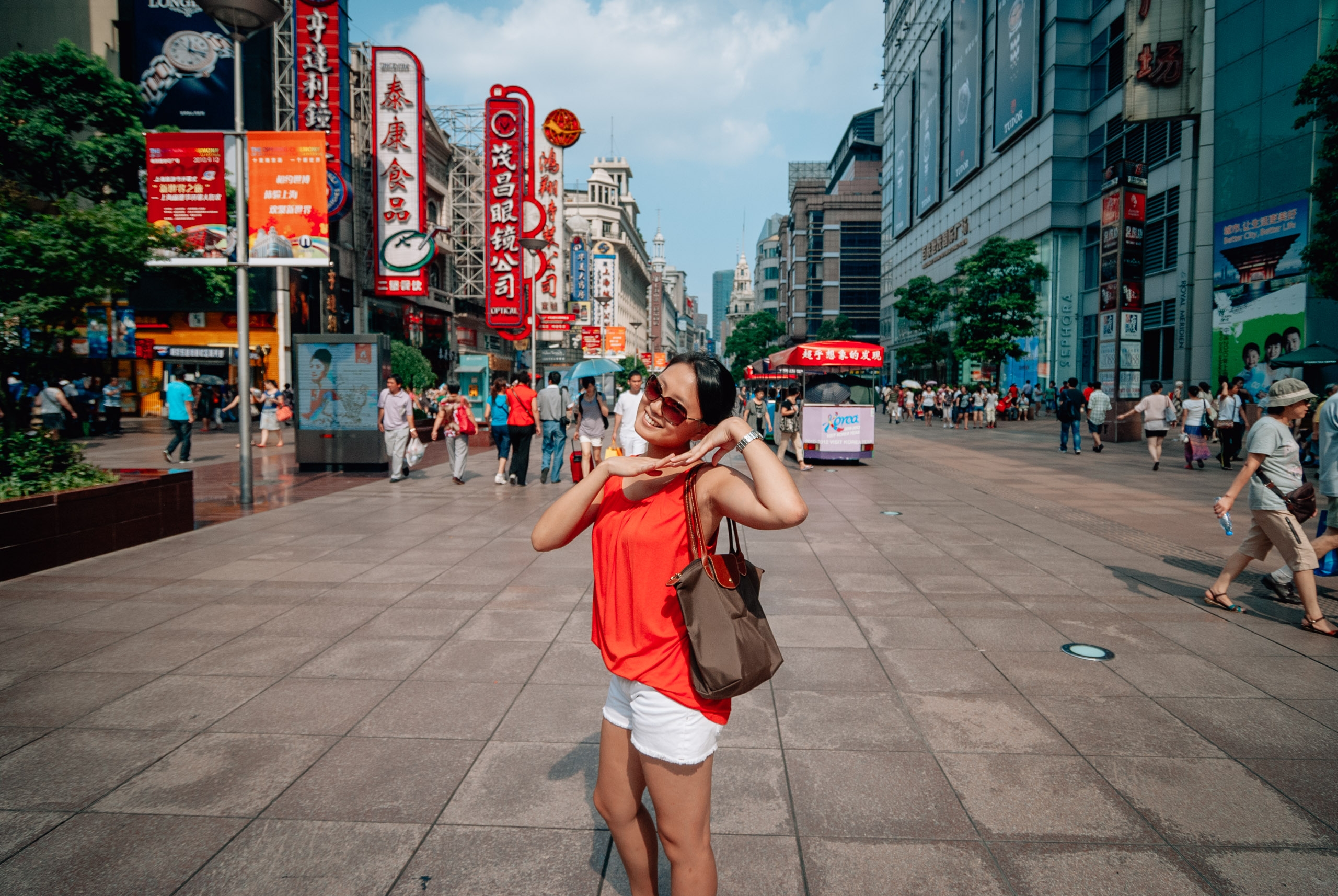
After the Urban Planning Museum, we walked further down Nanjing Road (one of the main thoroughfares through Shanghai) where it turns into a large pedestrian mall. It was nice to be able to walk freely on the road without constantly watching for traffic. Chinese drivers are aggressive and no one should feel entitled to a right of way, pedestrian or otherwise. That being said, traffic was mostly civil (nothing compared to the madness of the streets of Vietnam. To this day I've seen nothing like Hanoi).
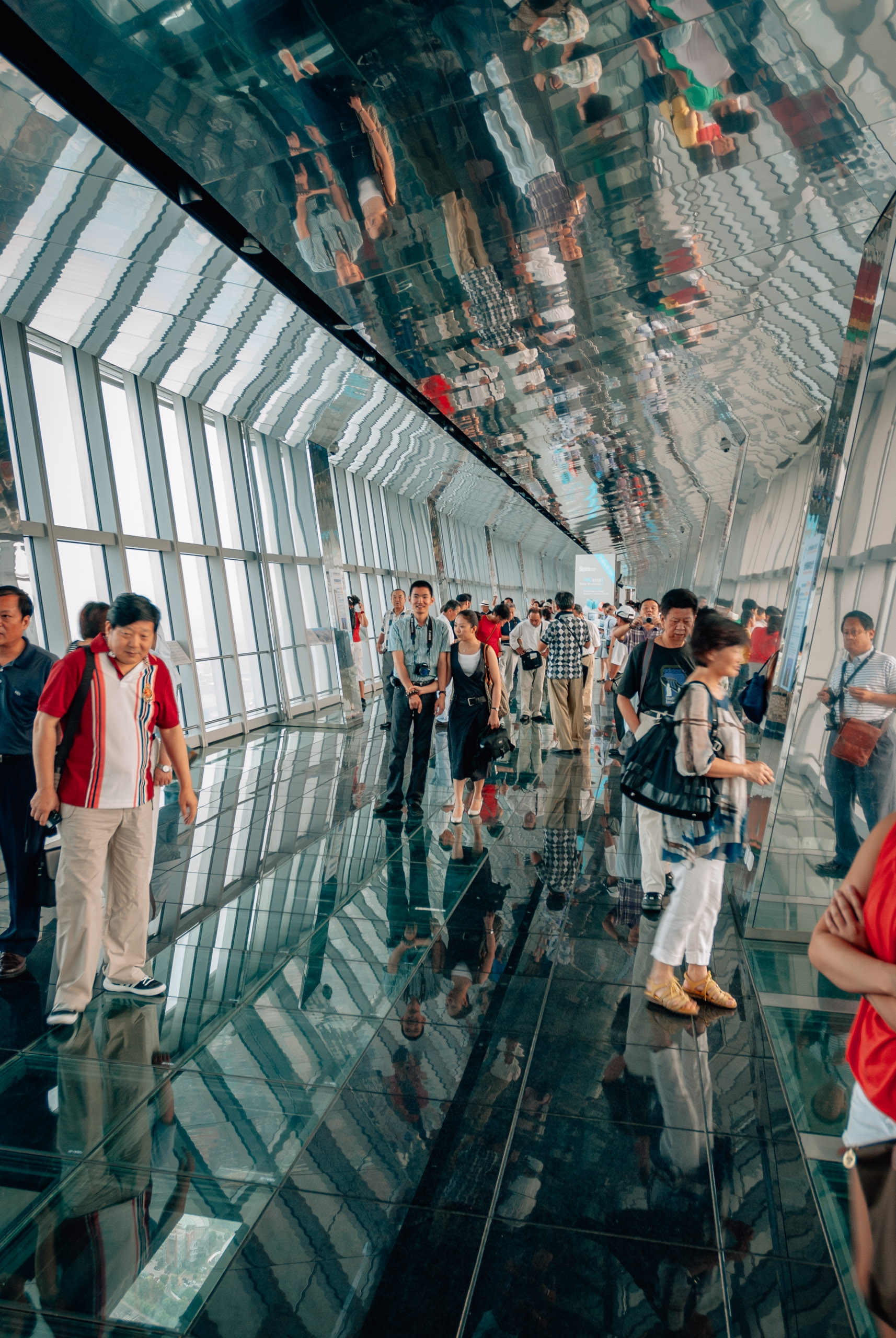
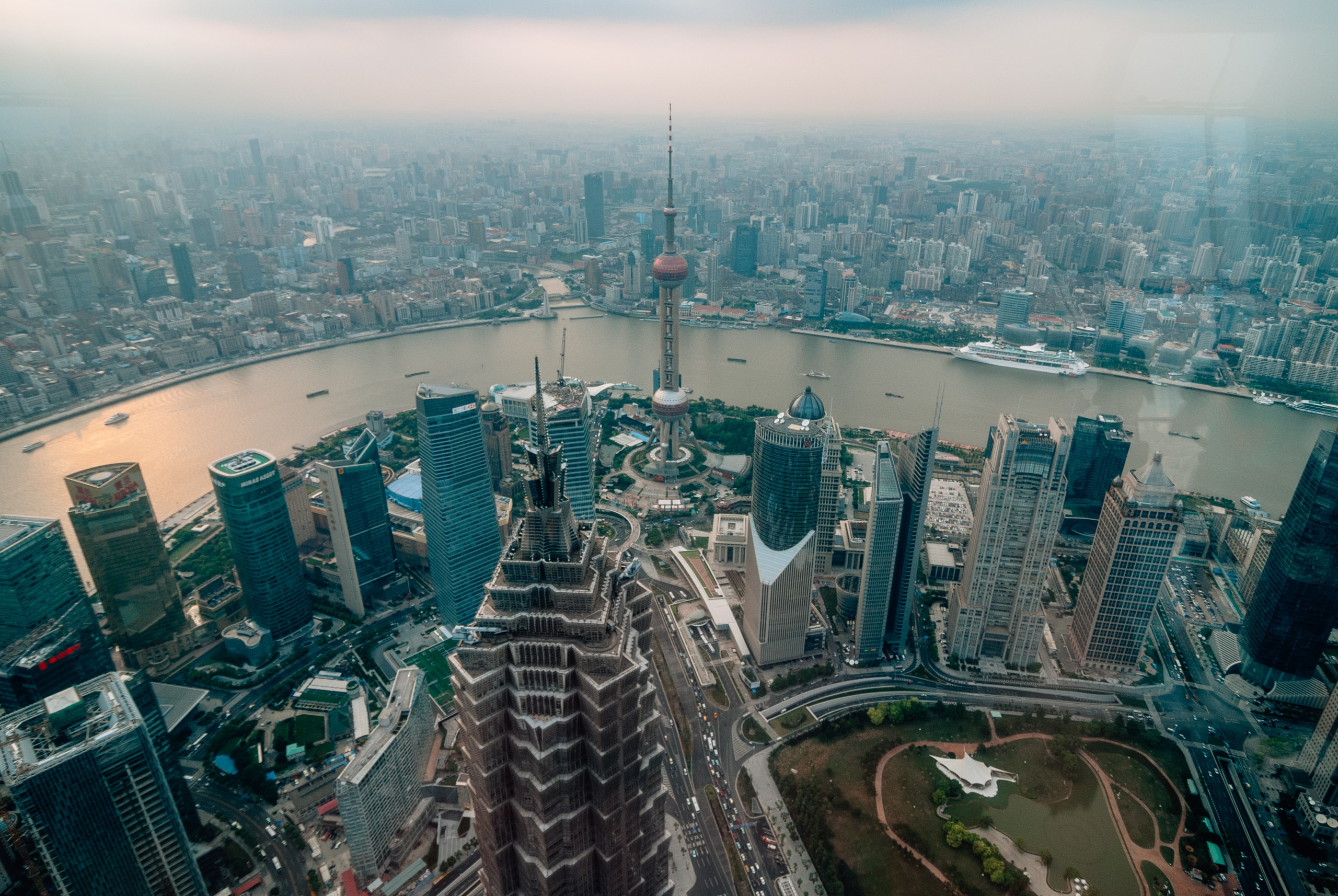
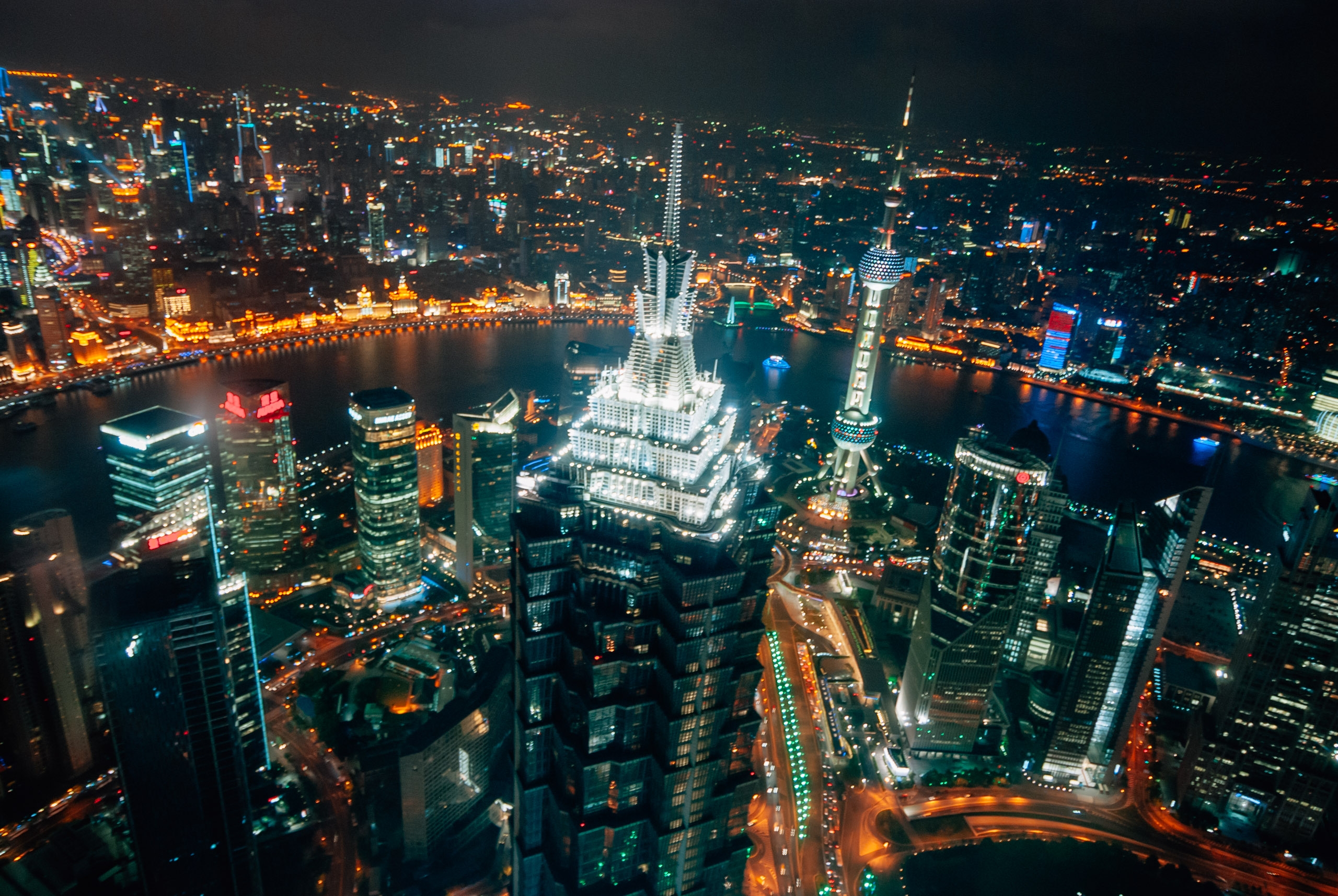
Shanghai is home to the tallest building in Asia, the Shanghai World Financial Center, and will soon also be home to the tallest building in the world as well. Interestingly, the urban planning museum depicted Pudong as a flat, featureless and unoccupied strip of waterfront land. In reality, hundreds of thousands have been displaced to build what is shaping up to be an impressive skyline.
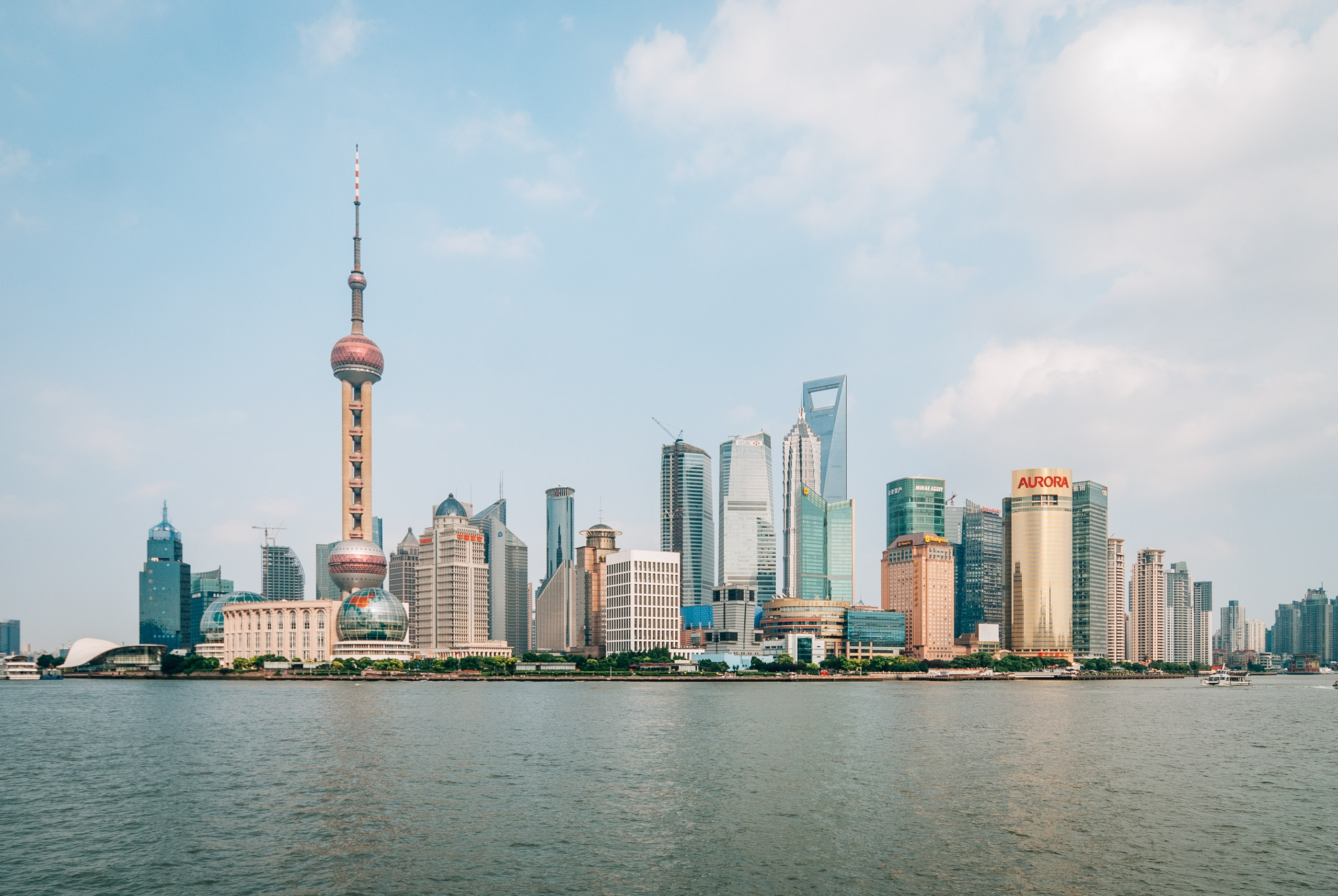
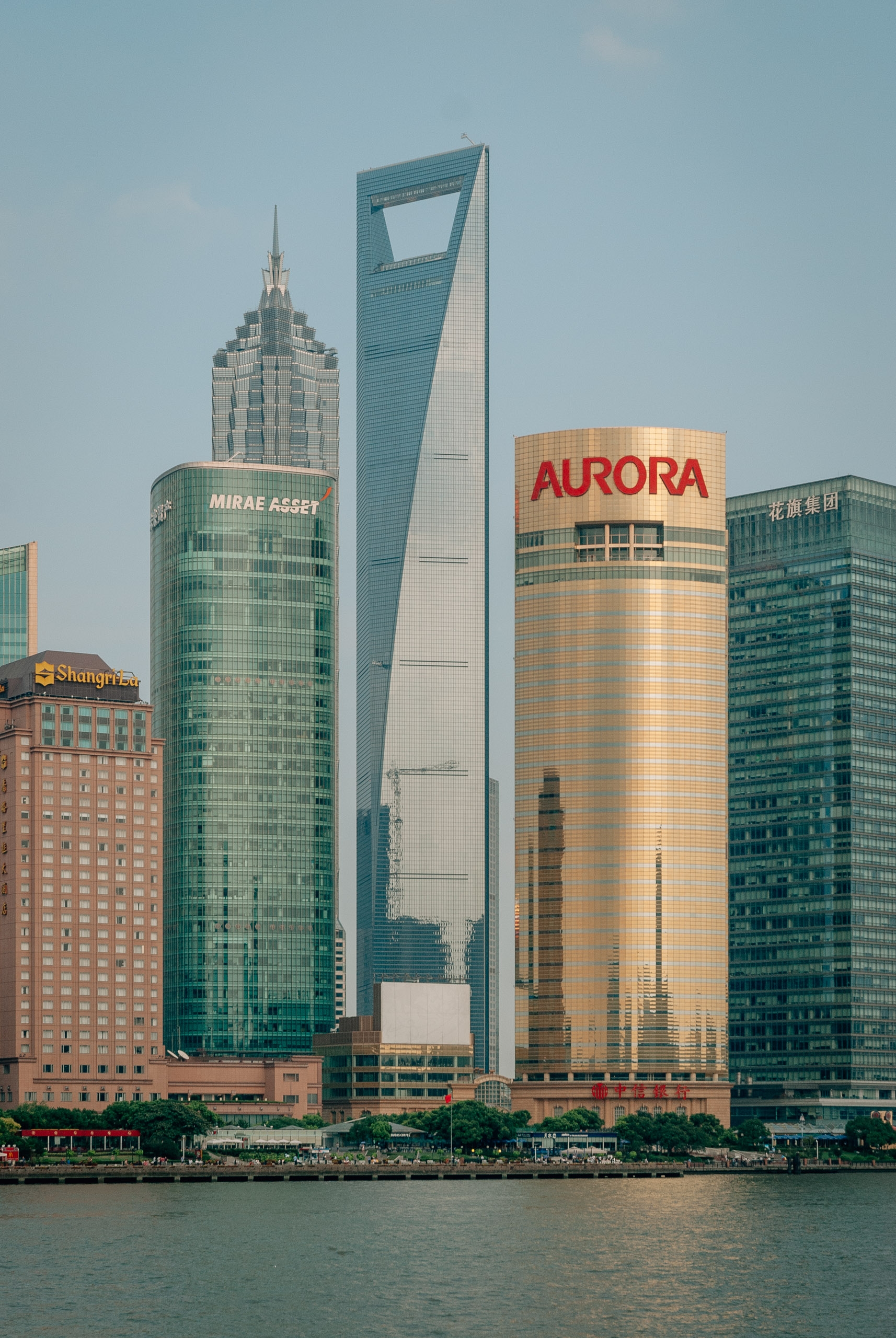
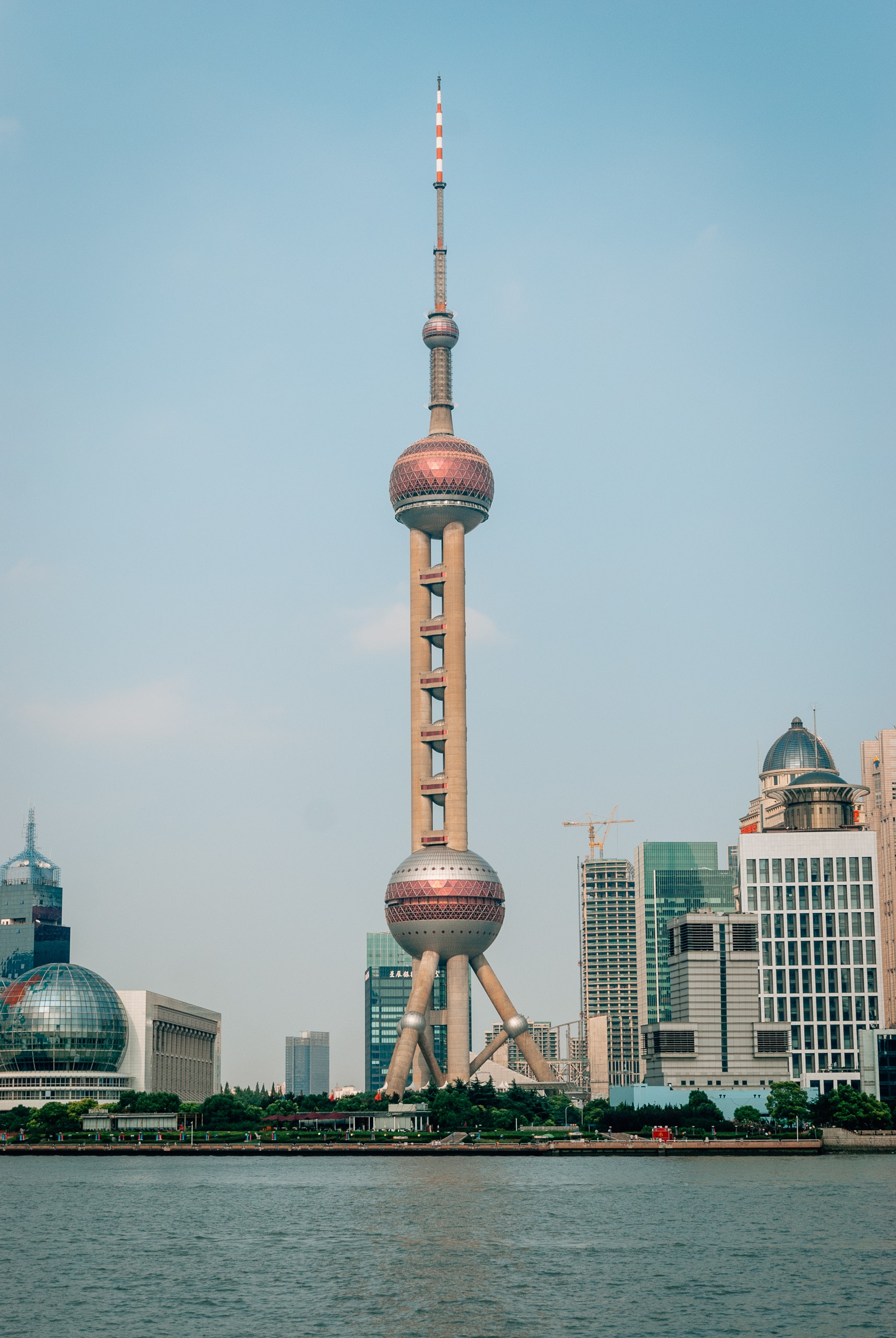
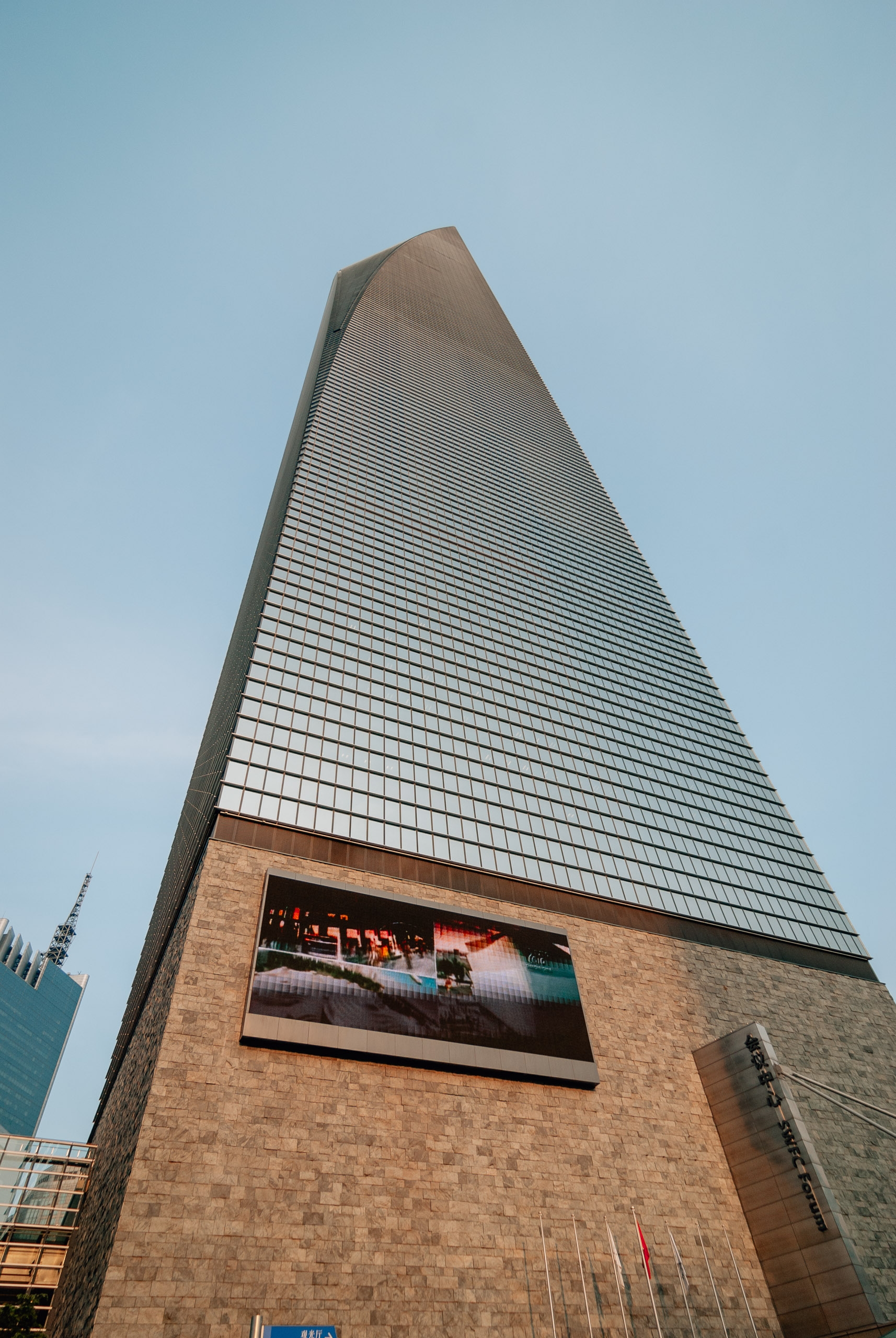
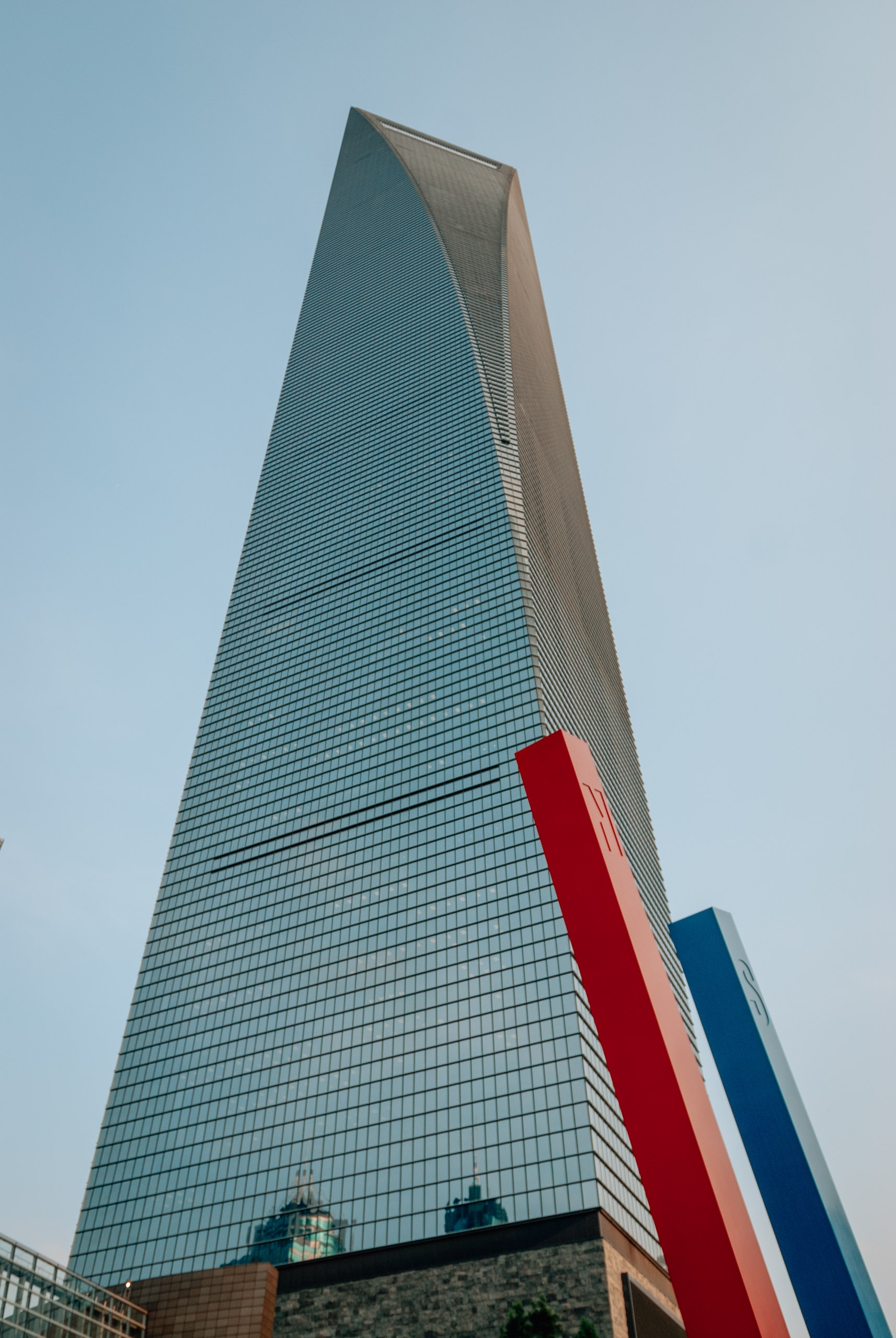
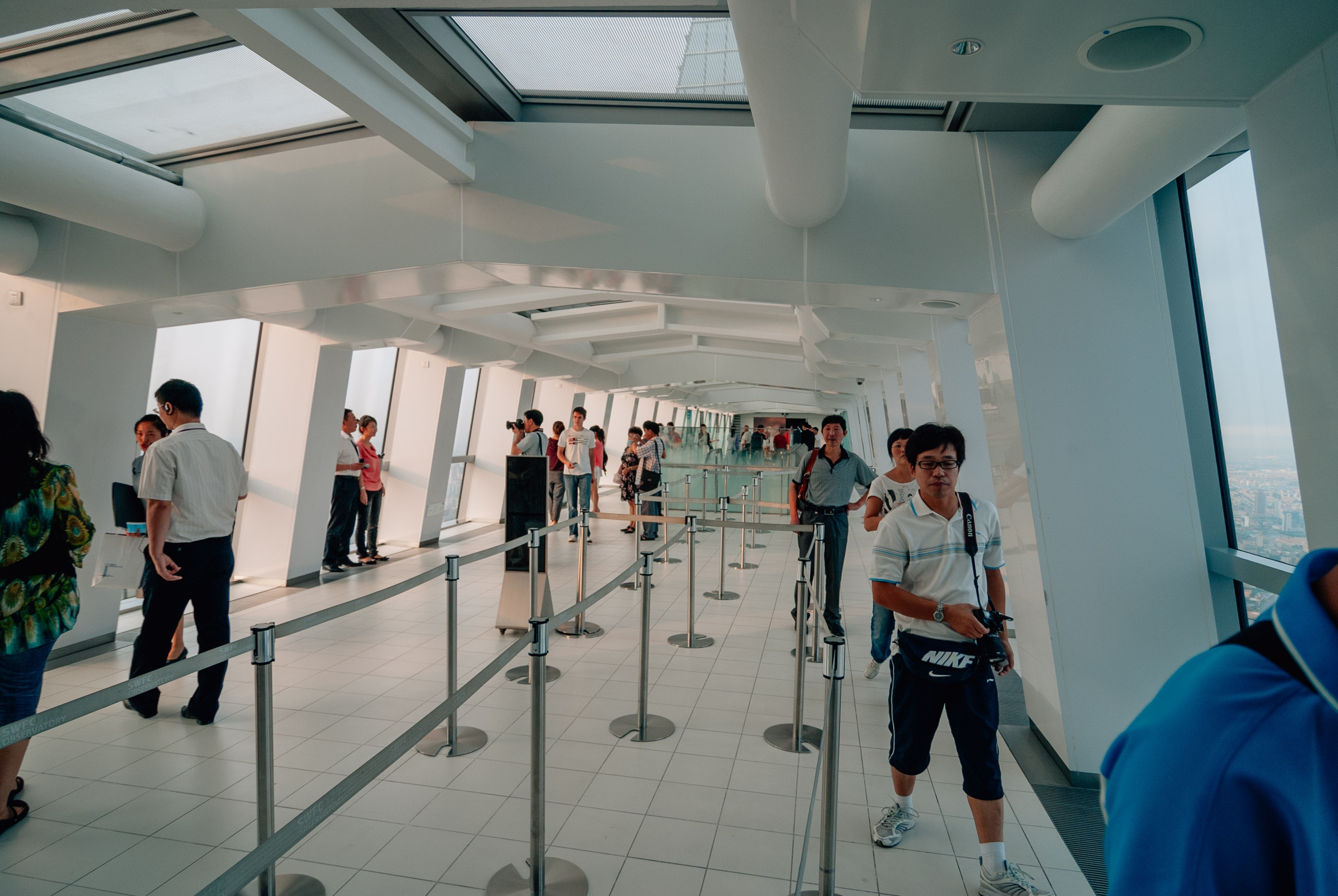
The World Financial Center is the second tallest building in the world, taller than Taiwan's Taipei 101 (we visited there in 2007), but slightly shorter than Dubai's Burj Khalifa, though the SWFC's observation deck is still the highest. The Park Hyatt Shanghai, on the 79th - 93rd floors, is the highest hotel in the world, just surpassing the Grand Hyatt Shanghai in the adjacent Jin Mao Building (which, incidentally, looks a lot like Taipei 101).
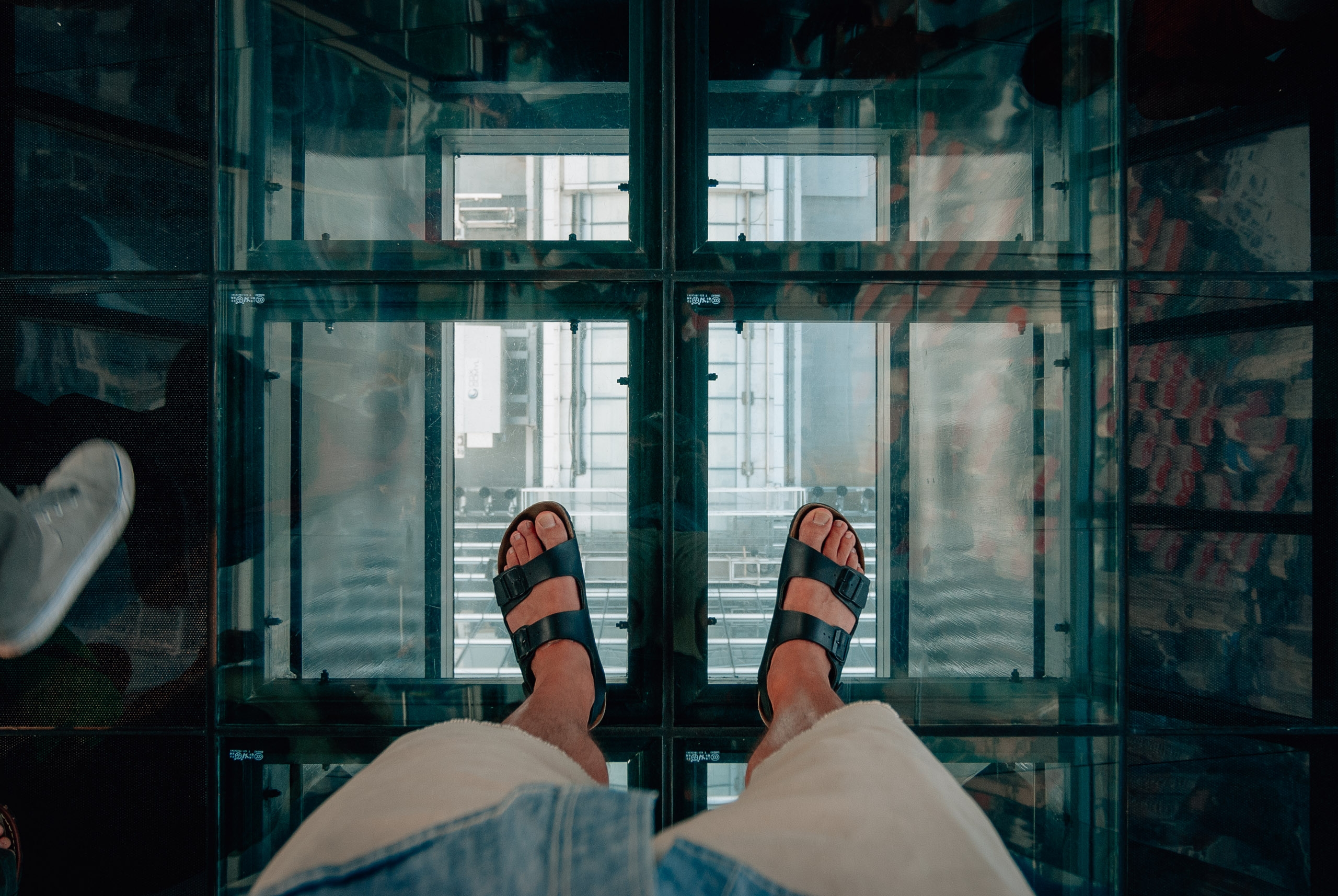
If Shanghai is any indication, this is shaping up to be the Chinese century.
Coming up: read about my travels to Cuba, Iran and North Korea at the World Expo.