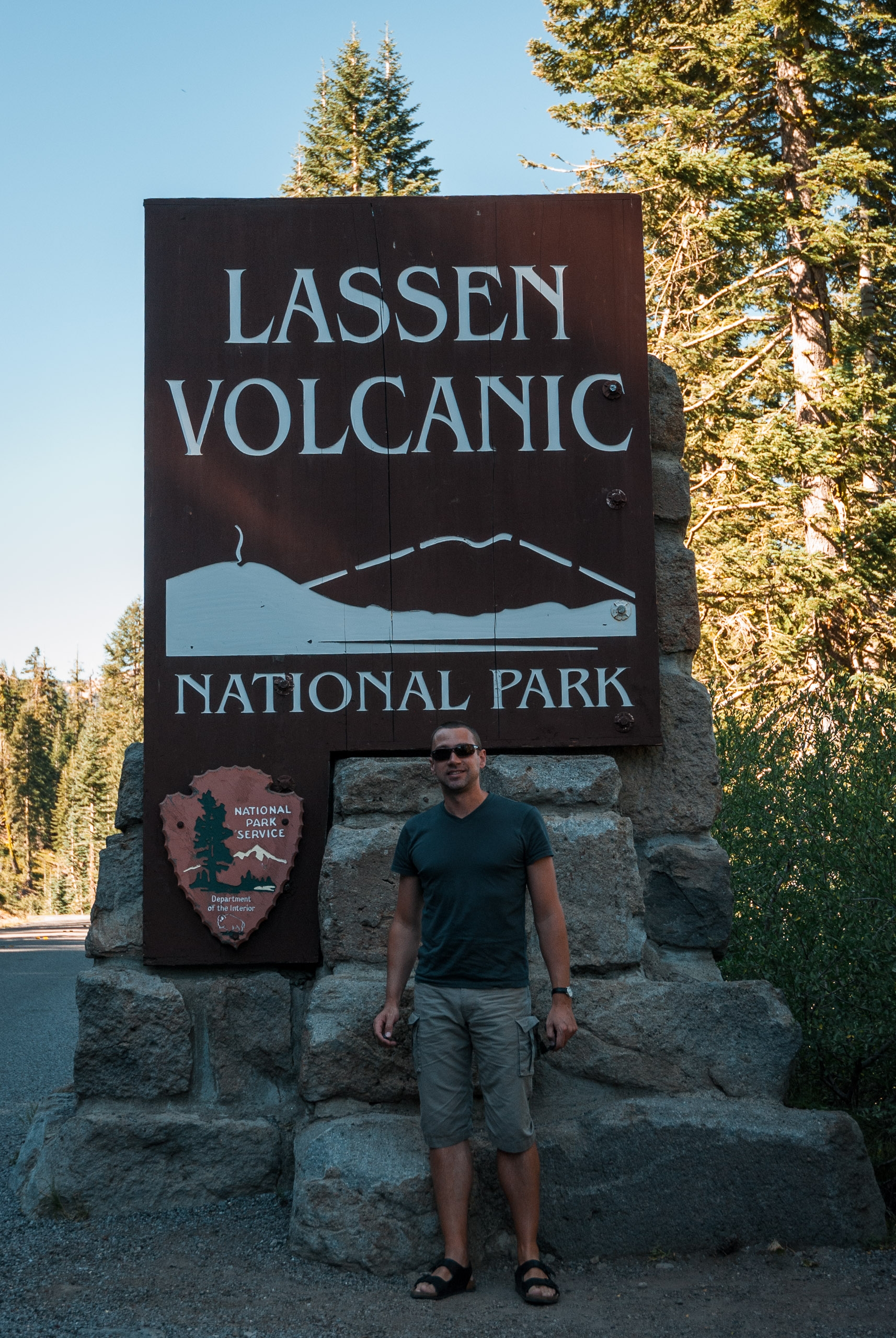
Lassen is one of the lesser-known National Parks even among those native to California. I've spoken to many in San Francisco who have never heard of it, despite its mere 220 miles from the Bay Area. In many ways, Lassen is the Ringo Starr of California's National Parks, with Yosemite definitely stealing the limelight. Lassen is a great visit for many reasons: despite being further than Yosemite, the route is nearly entirely freeway so door-to-door is about 3 and half hours. Also, because of its relatively obscure status, it gets very few visitors making it an ideal destination for solitude and a more subtle appreciation of nature. The landscape is not as breathtaking as Yosemite, but unique and interesting in its own right given the region's recent history of volcanic activity. My recent trips to Lassen have been focused on backcountry backpacking and trekking to many of the park's remote lakes. Check out the link at the bottom of this post for pictures from my most recent trip with John McDermott and Tod Vedock last fall. As the photos suggest, it gets quite cold in Lassen. Even yesterday, with highs around 85, it dropped to 35 at night.
As I mentioned, getting to Lassen is pretty easy. Take I-5 North via I-205 from I-80 and you'll be in the town of Red Bluff in about 2.5 hours. Skip Red Bluff and head for Mineral outside the Park's entrance. A short distance from the park is the Mineral Lodge, whose restaurant I highly recommend. There is a terribly grumpy old man who works the "general store" and appears to do very little except bark at the Mexican guy who runs the restaurant. He is waiter, cook, bus boy and I imagine dishwasher. Get the Volcano breakfast. Its mountainous.
The road approaching Lassen features many reminders of the volcanic past in this area. Vast grassy fields are strewn with boulders the size of small cars that were at one time violently ejected from the volcano's erupting crater. Seeing these rocks, you can imagine the peril one might experience should another eruption happen again.
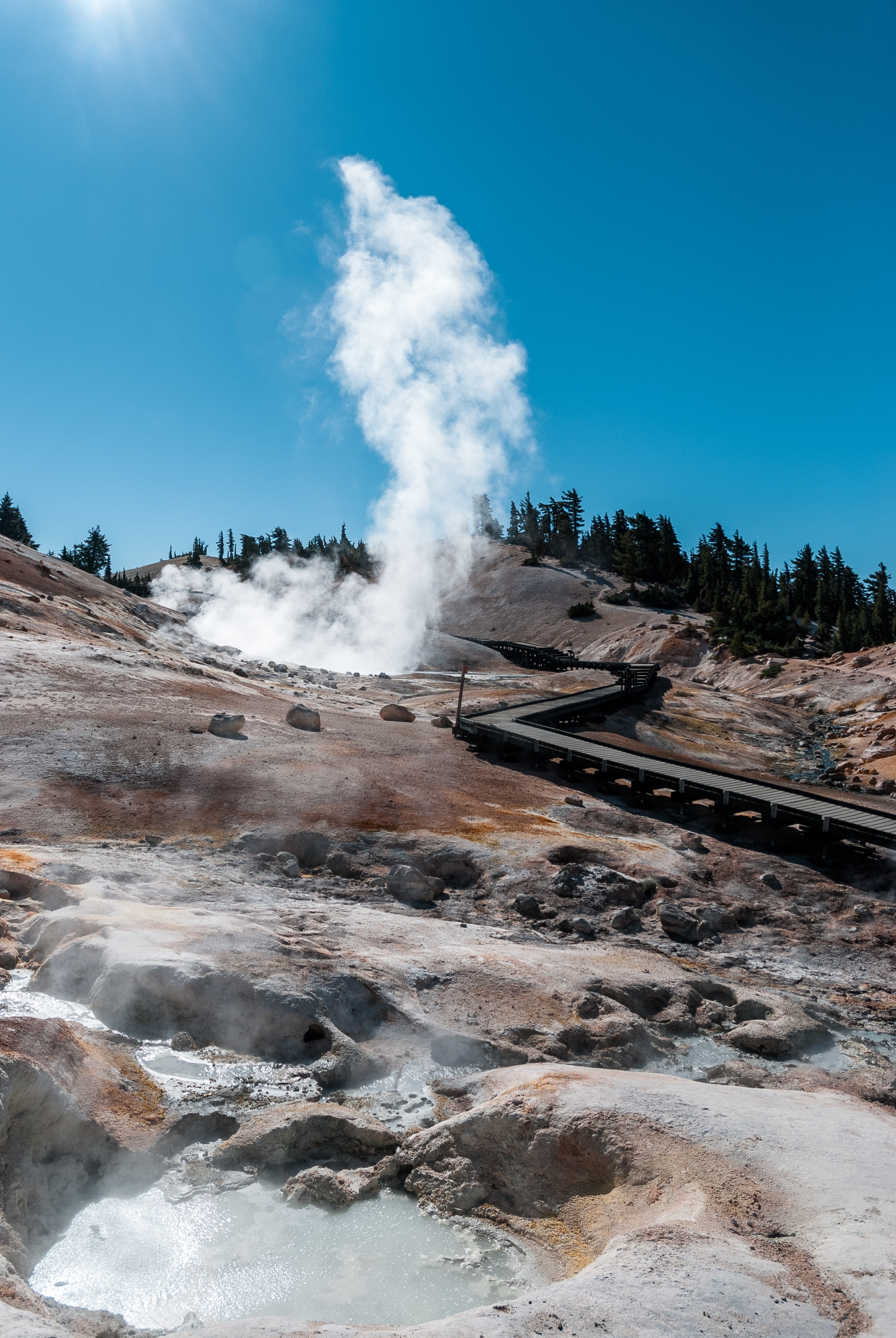
The landscape of today's Lassen park is dominated by Lassen Peak, rising to 10,457 feet. Lassen Peak holds the distinction as being the largest plug-dome volcano in the world. A perhaps unappealing analogy is that of a giant zit; as magma and molten rock push toward the Earth's crust, surface features impede this progress causing the ground to swell behind the impending pressure. The most recent eruption of Lassen Peak was in 1914 and well-documented by local inhabitants and the San Francisco Chronicle. Prior to this eruption, the pre-existing Cinder Cone and interesting geo-thermal features were already designated as National Monuments by President Roosevelt (Theodore). After the eruption, these monuments were combined and surrounding areas were protected as Lassen Volcanic National Park. The motivation for the National Park status was to preserve the land following the eruption and allow both the Public and scientists to observe the natural recovery and rebirth of the landscape. Touring the park today, its not as obvious that such a devastating eruption took place as recently as 1914. If you've visited Mt. St. Helens, you could easily conclude that eruption happened yesterday. Today's Lassen is very much covered by vegetation, but remnants of its recent volcanic past remain in the form of giant cinder cones, fields of blackened rock, steam vents, mud pots and fumaroles.
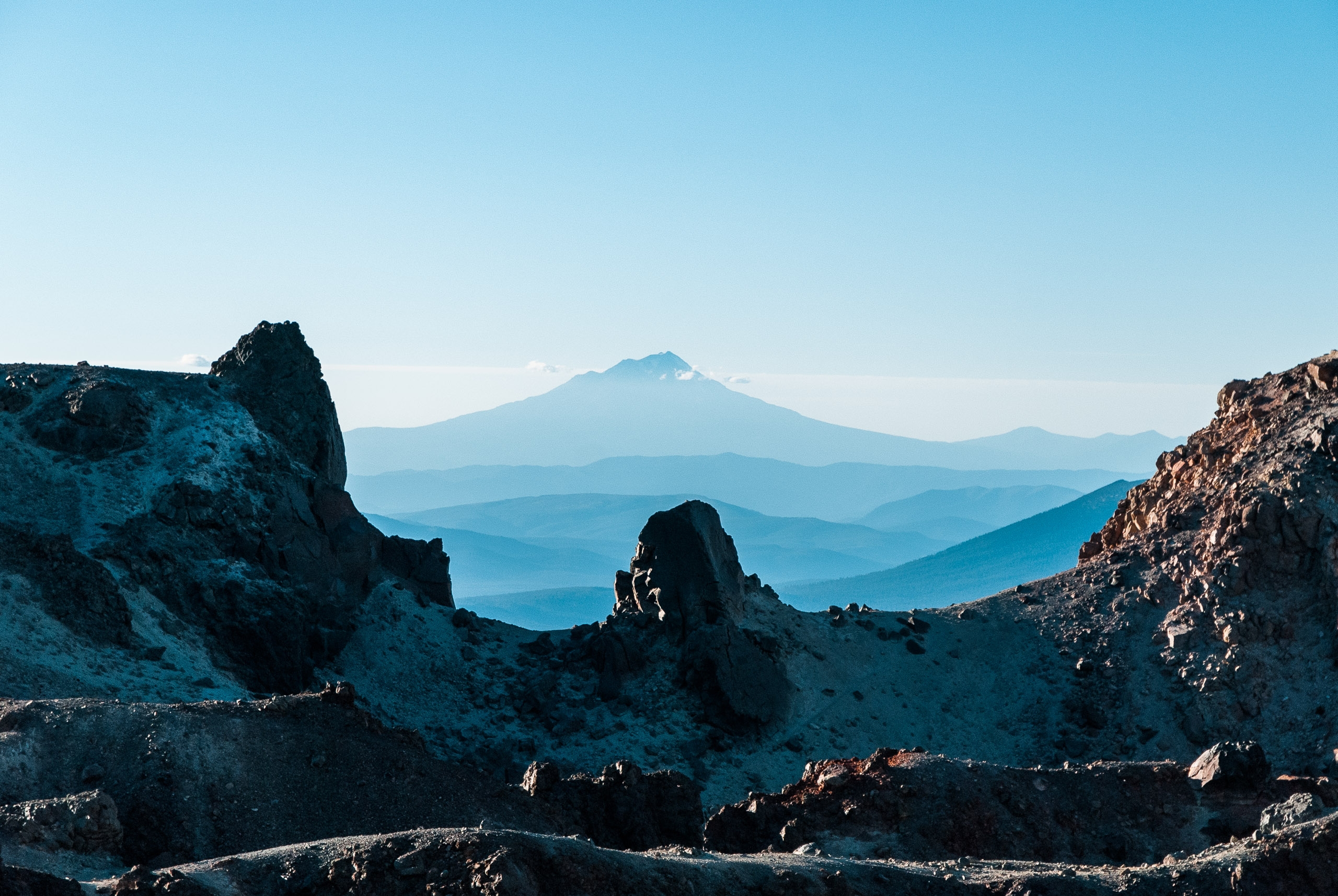
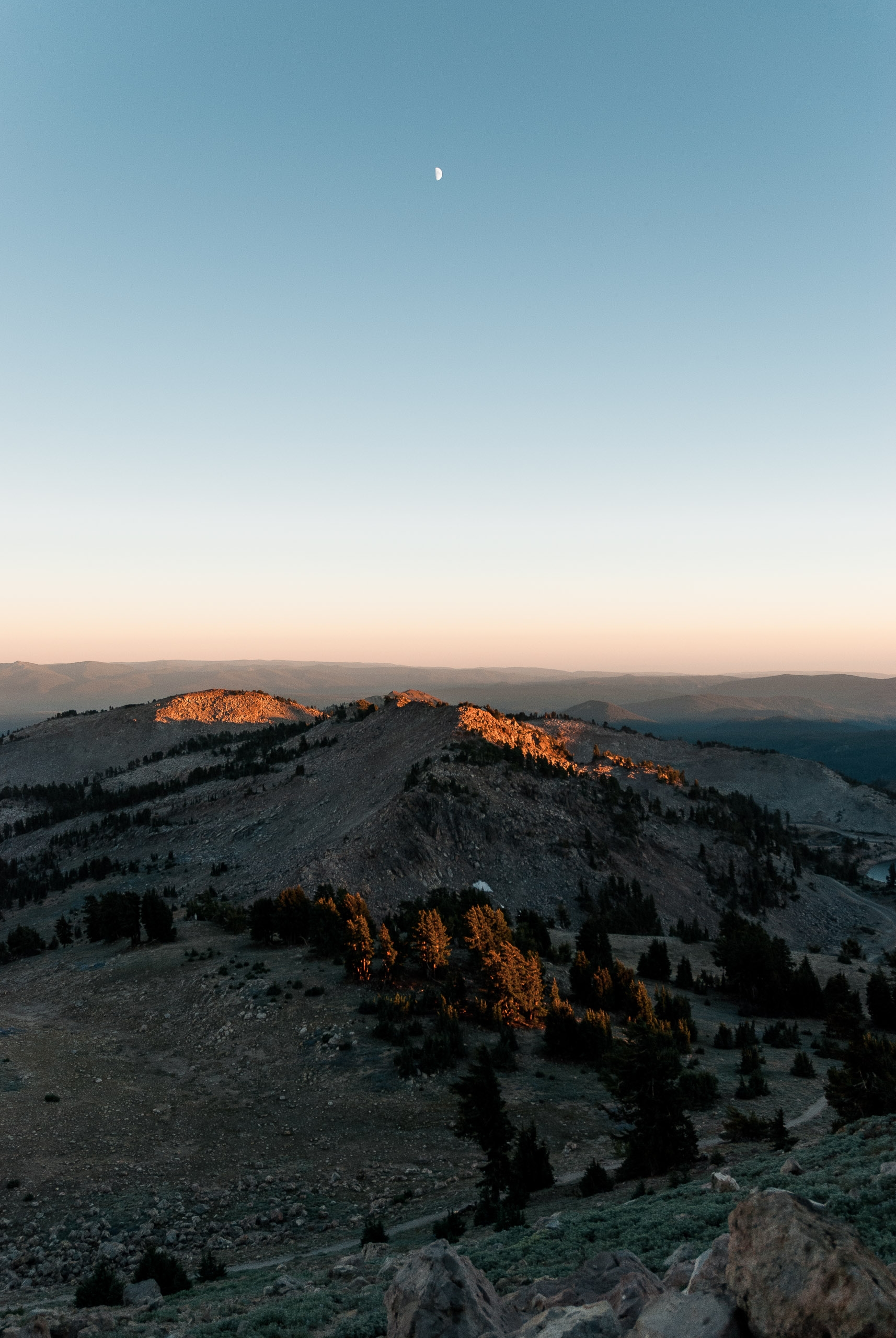
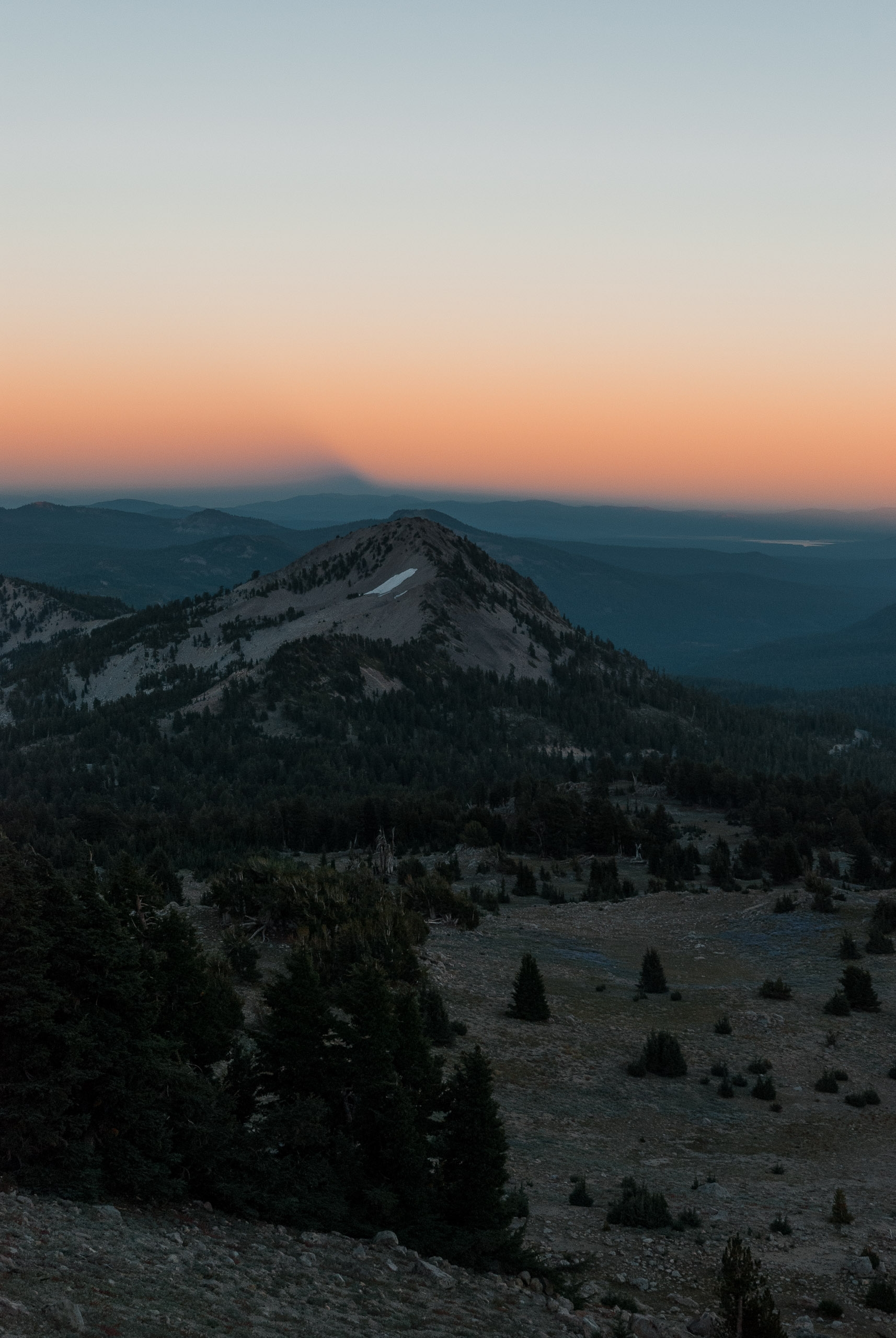
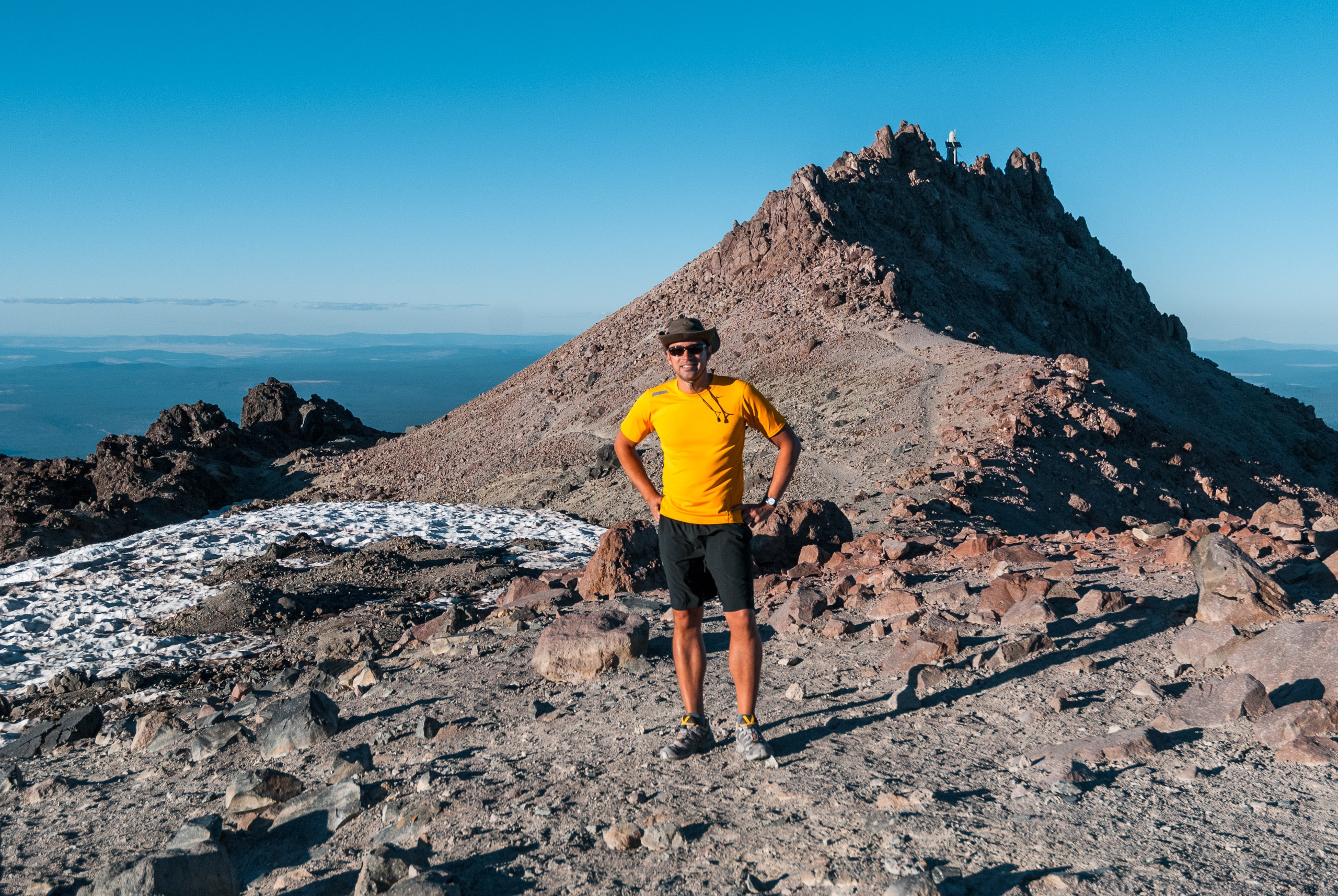
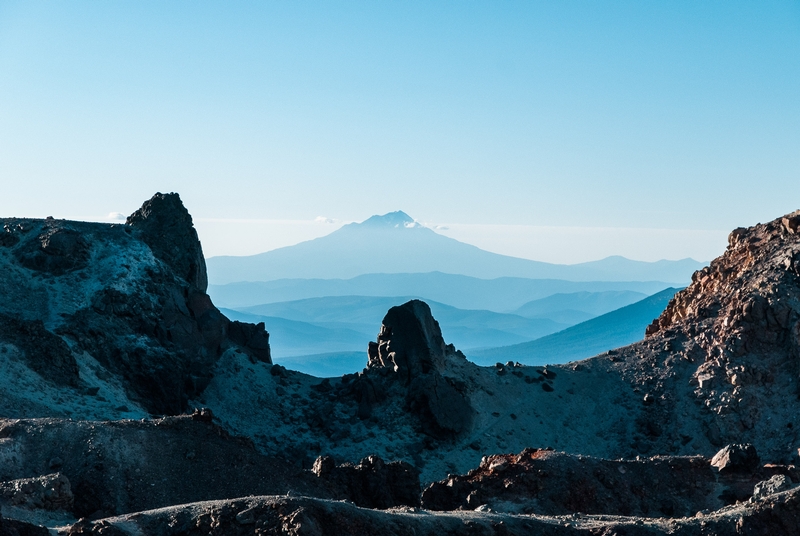
As I mentioned, I wanted to summit Lassen Peak and visit the geothermal sites known as Bumpass Hell. "Climbing" the peak sounds dramatic, but its a relatively moderate hike along a well-formed trail. The trailhead starts around 8,500 and rises another 2,000 feet over 2.5 miles (5 miles round trip). Guides will tell you the hike takes 5 hours. I got to the top in a little over an hour. The view is pretty incredible, and is most enjoyed at sunrise or sunset. to the North you can make out Mt. Shasta, California's 2nd highest peak. To the East you can see the Sierra Range and on clear days you can see Yosemite to the Southeast and the Three Sisters of the Cascade Range in Oregon.